EC magazine 01 2015
EC magazine 01 2015

Endoscopy Unlimited – The New Endoscopy Campus for Everyone!<!--
Here, the latest content from Endoscopy Campus is concisely prepared for you.
-->Order Print Edition (German Version)
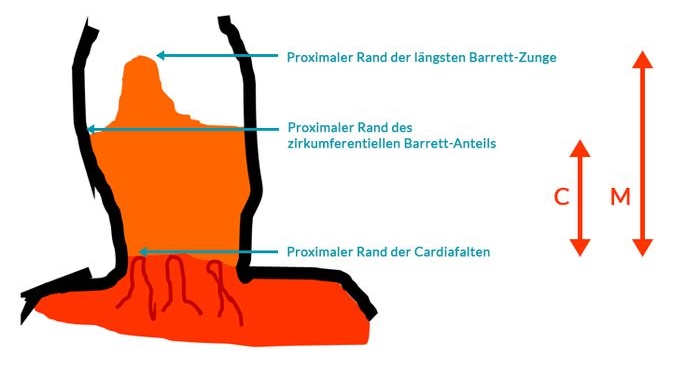
Prague Classification Barrett Esophagus
The Prague classification was presented by an international research group in 2006 (1) and has since been regarded as the standard for measuring the length

Reflux Esophagitis: Los Angeles Classification
Gastroesophageal reflux disease with endoscopically identifiable lesions (erosions, stricture, Barrett’s esophagus) is defined as erosive gastroesophageal reflux disease (GERD). Fewer than 50% of patients with

Polyp Classification: NICE
The NICE (NBI International Colorectal Endoscopic) Classification is based on narrow-band images of colon polyps. The classification uses staining, vascular patterns, and surface patterns to
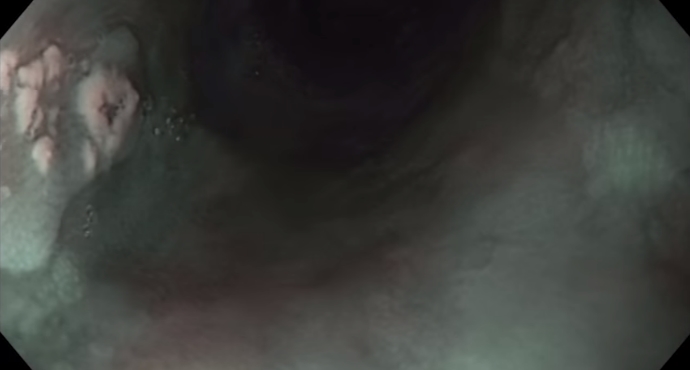
Early esophageal carcinoma (squamous epithelium): tips and tricks for difficult ESDs
Early esophageal carcinoma (squamous epithelium): tips and tricks for difficult ESDs

Small carcinoma in Barrett’s esophagus — EMR and RFA
A 46-year-old patient with short-segment Barrett’s esophagus that had been receiving monitoring since 2009, now presenting with a mucosal adenocarcinoma.
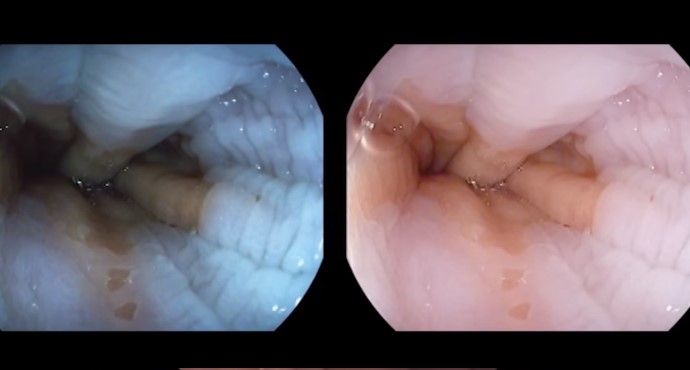
Endoscopic examination of a normal Z-line
Visualization of the Z-line without enhancement and with iScan, obstructed by esophageal motility.

Fecal DNA testing — a new threat to screening colonoscopy?
Fecal tests have increasingly moved on from the classic fecal occult blood test (FOBT) to fecal immunologic testing (FIT), particularly in countries with newly introduced

New wide-angle colonoscope — far more adenomas?
A new wide-angle colonoscope now provides a viewing angle of 330°, at least on one level, which represents practically a doubling in comparison with previous

Adenoma rate confirmed as most important quality parameter in screening colonoscopy
There has been increasing discussion regarding quality indicators in colonoscopy, and on the ways in which what parameters should be assessed and compared using benchmarking.

Duodenoscopes with problem bacteria — only in the USA?
It has long been known that bacterial infection can be transmitted via endoscopes. Review studies have shown that infections are still occurring and are usually

How dangerous are serrated adenomas?
Sessile serrated adenomas (SSAs) are the latest fashion in gastroenterological endoscopy. Individual histopathological examinations have shown that there is a separate pathway to carcinoma, apparently