Increasing numbers of cystic tumors in the pancreas are being diagnosed. It is often difficult to precisely assign these highly varied tumors to a specific
lesions
lesions
IMPN: Fukuoka Classification (Guidelines)
IMPN: Fukuoka Classification (Guidelines)

WASP classification – optical diagnosis of polyps <10mm
WASP classification – optical diagnosis of polyps <10mm
Recently sessile serrated lesions (SSLs) have been recognized as another important precursor lesion to CRC. SSLs are thought be responsible for 15–30% of colorectal cancer.

Paris Classification: Early Barrett Cancers
Paris Classification: Early Barrett Cancers
In the following, examples for superficial/early Barrett lesions of the esophagus are shown. Here, flat and sessilelesions are predominant, pedunculated tumors are rare. Sessile tumor
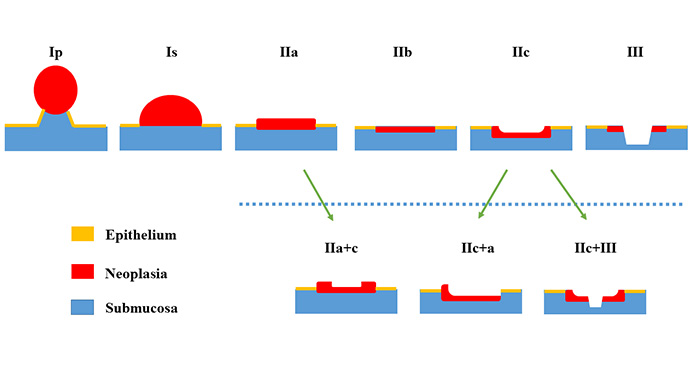
Paris Classification Early Cancer
Paris Classification Early Cancer
Endoscopic treatment for early carcinoma in the gastrointestinal tract has in the meantime become evidence-based and has been incorporated into national and international guidelines

Paris Classification: Early Squamous Cell Cancers Esophagus
Paris Classification: Early Squamous Cell Cancers Esophagus
Examples of superficial/early squamous cell lesions in the esophagus are presented below. In the esophagus, flat lesions are predominant in the early tumors, and polypoid