While the role of obesity in gastroesophageal reflux disease (GERD) and the role of GERD in Barrett’s esophagus (BE) are independently well established, there is
Barrett’s esophagus
Barrett’s esophagus
Is Obesity a Risk Factor for Barrett’s Esophagus?
Is Obesity a Risk Factor for Barrett’s Esophagus?
Patients With Barrett’s Esophagus and Indefinite Dysplasia: What To Do?
Patients With Barrett’s Esophagus and Indefinite Dysplasia: What To Do?
Prateek Sharma, MD, FASGE, reviewing Krishnamoorthi R, et al. Gastrointest Endosc 2020 Jan. The risk of progression in Barrett’s esophagus (BE) with low-grade dysplasia has
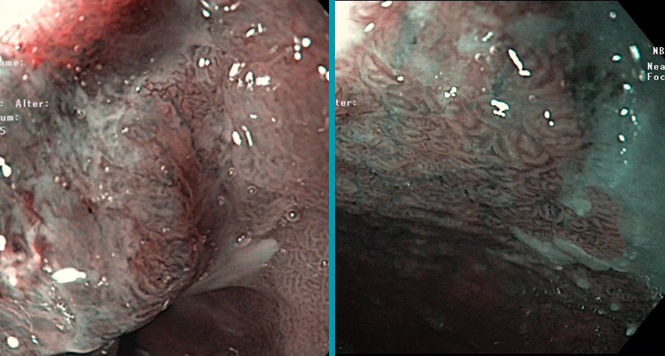
BING Classification Early Barrett Neoplasia
BING Classification Early Barrett Neoplasia
Multimodal therapy for early Barrett’s neoplasias, has become established as the standard therapy and is set out in national and international guidelines. These dysplastic lesions

PPI, Aspirin and Prevention of Barrett’s Neoplasia – How Do We Treat Our Barrett Patients Now?
PPI, Aspirin and Prevention of Barrett’s Neoplasia – How Do We Treat Our Barrett Patients Now?
Almost everybody prescribes at least low-dose PPI to their Barrett patients even if they complete asymptomatic – is this warranted?
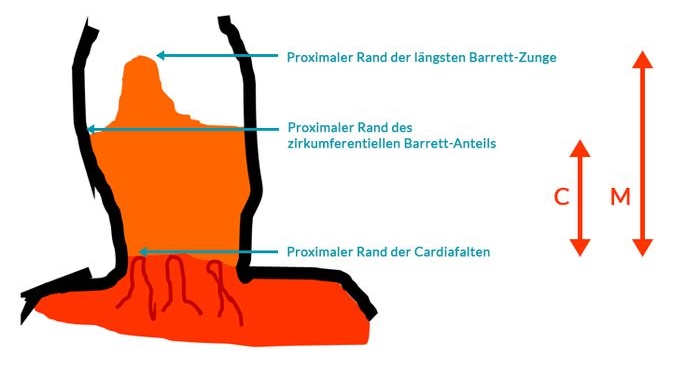
Prague Classification Barrett Esophagus
Prague Classification Barrett Esophagus
The Prague classification was presented by an international research group in 2006 (1) and has since been regarded as the standard for measuring the length

Reflux Esophagitis: Los Angeles Classification
Reflux Esophagitis: Los Angeles Classification
Gastroesophageal reflux disease with endoscopically identifiable lesions (erosions, stricture, Barrett’s esophagus) is defined as erosive gastroesophageal reflux disease (GERD). Fewer than 50% of patients with

Small carcinoma in Barrett’s esophagus — EMR and RFA
Small carcinoma in Barrett’s esophagus — EMR and RFA
A 46-year-old patient with short-segment Barrett’s esophagus that had been receiving monitoring since 2009, now presenting with a mucosal adenocarcinoma.

Low-grade dysplasia in Barrett’s esophagus — a second opinion is important, but then treatment is needed
Low-grade dysplasia in Barrett’s esophagus — a second opinion is important, but then treatment is needed
Low-grade dysplasia (low-grade intraepithelial neoplasia, LGIN) is difficult to distinguish from inflammation histopathologically. The interobserver variance rates usually show kappa values below 0.4, representing a